From Agentic Coding to Agentic Marketing
March 8, 2026Note: This article is part of an ongoing AI-assisted development series (/ai).
Software is getting cheap to build. In just the last few months, the ecosystem has exploded with coding agents, and open-source tools & frameworks that make it possible to go from idea to a functioning app in an afternoon, something that would have taken a team months not long ago.
With coding relatively solved, the hard question has shifted to distribution, how to reach the right people, earn their trust, and convert that into something sustainable.
A couple of weeks ago I started building a system to tackle exactly that.
The Marketing Command Center
The goal was to apply the same systematic thinking I use for engineering to sales and distribution. There is a methodology to this, borrowed from frameworks that have worked at scale. These frameworks were adapted to my specific context and structured in a way that can evolve over time.
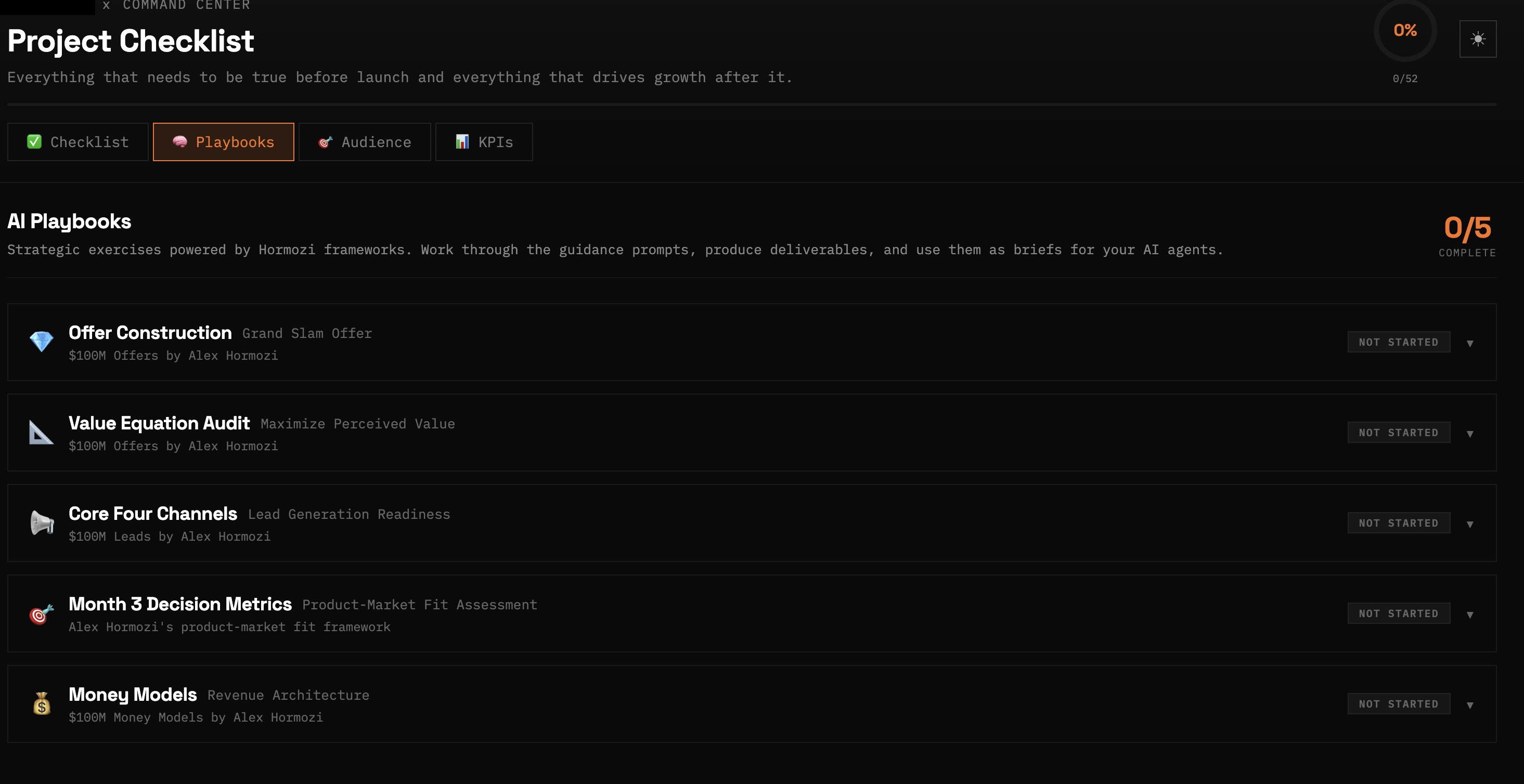
The starting point was Alex Hormozi’s playbook, his books, his talks, the process he’s refined over years of building businesses. The playbook currently covers offer construction, value equation, lead generation channels, and product-market fit assessment.
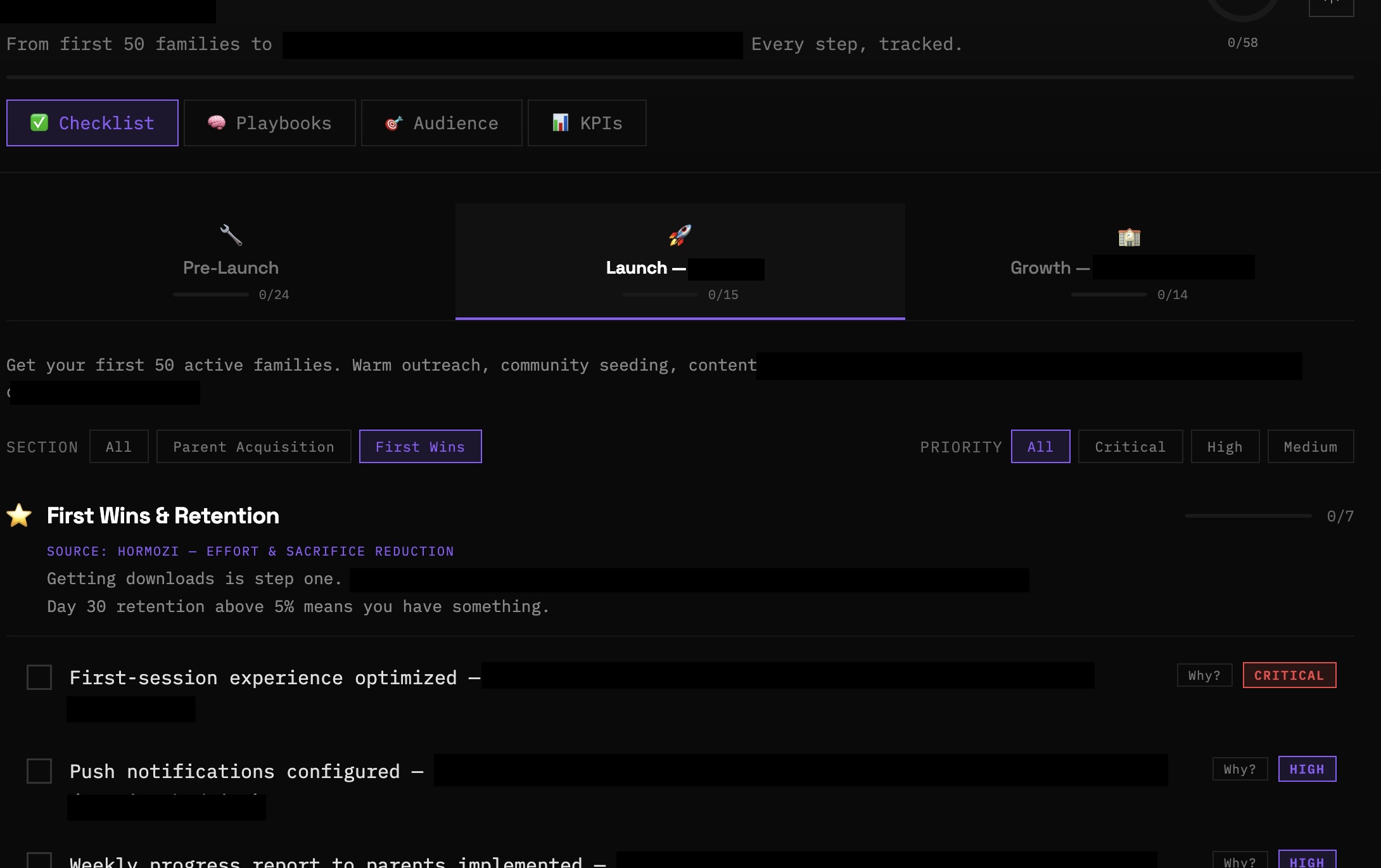
The Command Center has four layers: a Checklist, Playbooks, Audience Tracking, and KPIs. The checklist drives the daily work, broken into phases covering pre-launch, outreach, and growth, with each item tagged by priority and sourced to a specific framework or learning.
The Agent Pipeline
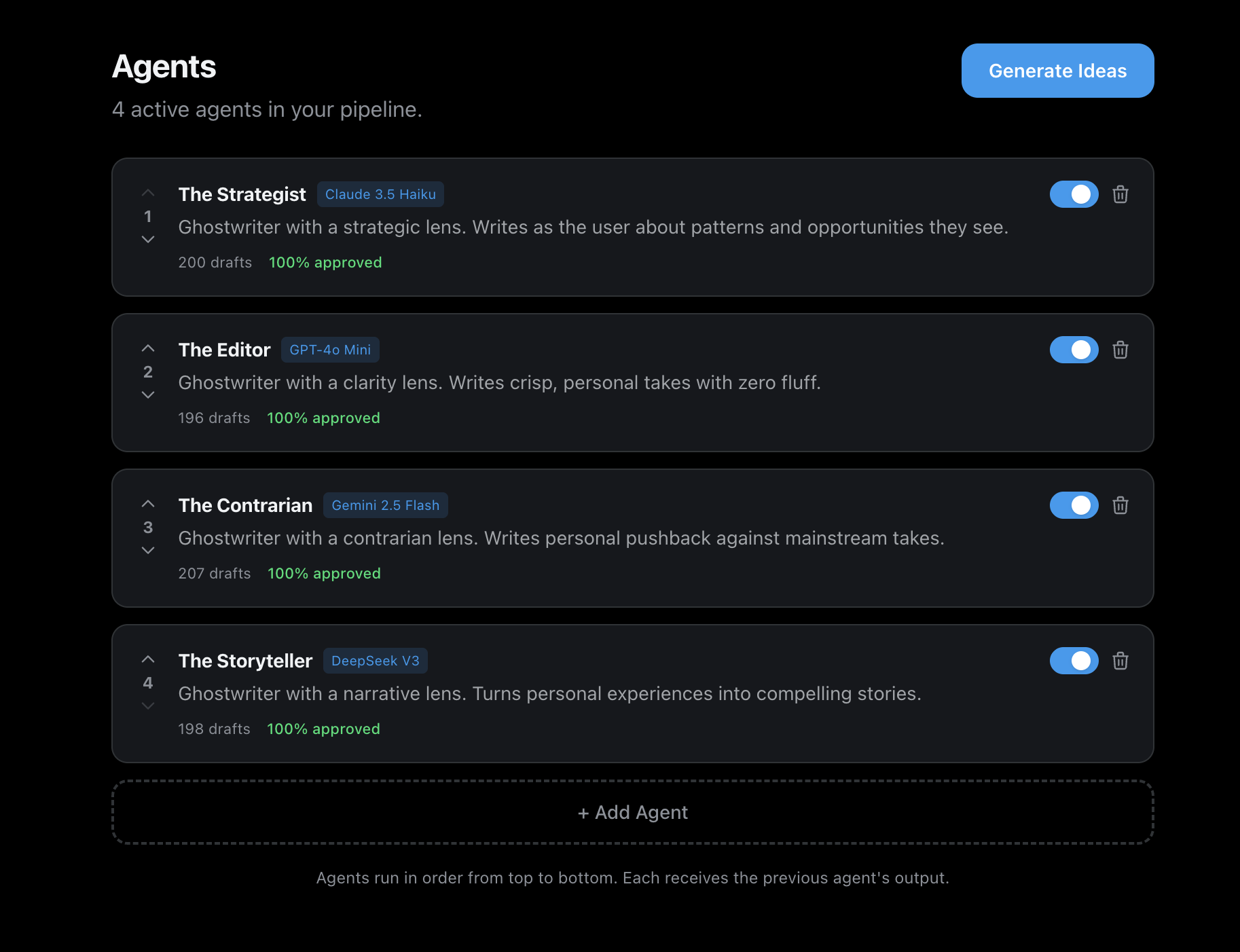
The Command Center also has a set of agents that handle the operational work of distribution. They research the web, draft content, create social media and blog posts, give feedback on strategy, and help think through decisions.
Each one has full context on the product, the content pipeline, the marketing strategy, and the current state of development so every response is grounded in where things actually stand.
The next iteration will be agents that can create and ship things directly without me in the loop. Right now I’m doing all the orchestration myself, similar to how I was orchestrating the code a few months back.
The Chrome Extension
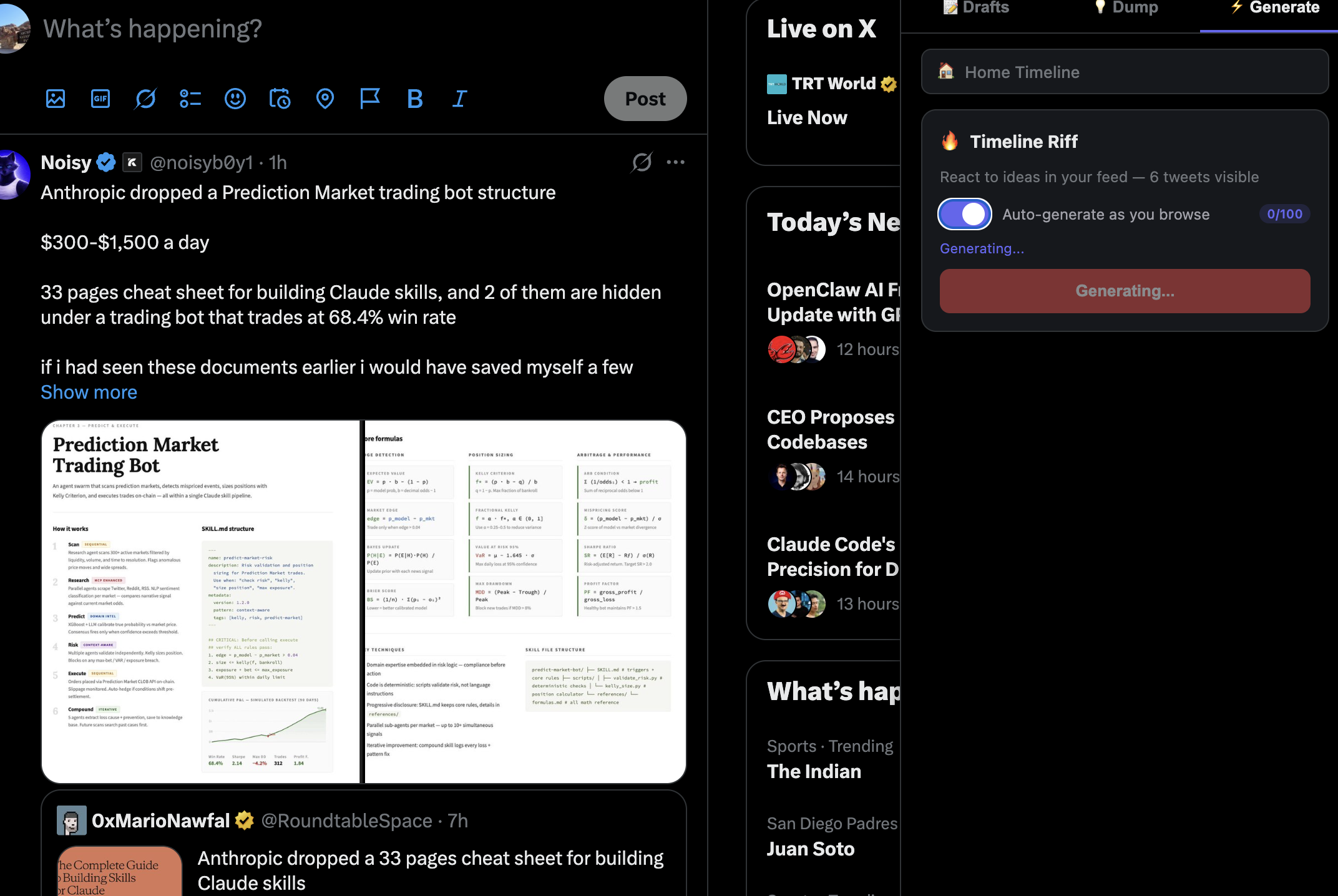
A browser extension runs quietly in the background while browsing X. It monitors the feed, captures what’s relevant, and periodically the agents connect those captured ideas to the relevant parts of the playbook and strategy.
Reviewing and acting on those connections is still manual for now. Eventually that loop closes too, and the agents handle the orchestration end to end.
Why This Matters
World class sales and marketing teams have always run on playbooks, built from scripts refined through thousands of conversations, and systems that don’t depend on inspiration or memory. The difference now is that you can build this infrastructure yourself without a team, and wire it directly into an agentic workflow that helps you execute.
The knowledge base is what ties it all together. It holds the playbooks, the business context, the content pipeline, and the market signals coming in from various channels. When a decision needs to be made on distribution or outreach, the agents already have everything they need to give a useful answer fast. This is where agents start doing real work.
For any business or project, this is where workflow is heading, a system where the knowledge base, the strategy, and the agents executing on it are all connected and constantly in sync.