Why Nepal Should Be the First Country to Give Its Citizens Free AI
March, 2026Summary
No government in the world has given every citizen meaningful access to AI. Nepal, a country that has missed every major technology wave while sending over 3.5 million of its people abroad to find opportunity, has a chance to go first.
Small countries have done similar things before. Estonia built digital government infrastructure in the 1990s when nobody else was doing it and is now considered the most digitally advanced nation in the world. Bhutan started mining Bitcoin in 2019 using surplus hydropower, and by 2024 had accumulated enough to fund civil servant salary raises, free healthcare, and a major national development project.
Why this matters to Nepal, now:
- Migration: Nepal cannot keep losing its most capable people to countries for better opportunities.
- Public utility: Countries that treat AI access as a public good early will have a structural advantage in every knowledge-based industry for years, and that gap widens with each year.
- Branding: No country has done this yet, and being first is a rare opening for a small nation to be noticed globally.
- A growing industry: Nepal’s IT export sector is already worth over NPR 1 kharba 45 arba annually, and broader AI access can expand the sector.
- Practical daily benefits: Students, farmers, small business owners, doctors in remote areas, and content creators all gain access to tools that currently cost NPR 2,940 per month or more when subscribed directly from international providers, which most people in Nepal simply cannot afford.
The artificial intelligence (AI) foundation models already exist, many are free to use, and the cost of running them nationally is far less than most infrastructure projects Nepal has taken on. At a reasonable estimate, giving all 16.5 million connected citizens a basic AI allowance each year would cost between NPR 9.7 crore and NPR 85 crore in annual compute (self-hosted models at 1 million tokens per citizen per year, small to large model scenarios), with initial infrastructure investment for a national small-model deployment between NPR 9 arba and NPR 22 arba spread over several years.
The gap between countries building national AI programs and those that are not will widen every year, not just in technology but in economic productivity, education quality, and the ability to compete globally in services. This is one of those decisions where moving early makes a permanent difference.
A Few Terms Used in This Essay
- Foundational model: a large AI system trained on vast amounts of text and knowledge. GPT, DeepSeek, Llama, and Claude are all foundational models. Think of them as a new kind of tool, except what they produce is written work, answers, code, and analysis rather than a physical product.
- Token: the unit in which AI models read and write text. One token is roughly three quarters of a word. A short conversation uses a few hundred tokens, and a detailed research session might use tens of thousands.
- Token budget: a yearly limit on tokens given to each citizen, similar to a mobile data plan but for AI usage instead of internet data.
- Open-weight model: an AI model whose full code has been released publicly, free to download and run on any server with no license fees or permissions needed.
- Closed model: an AI model only accessible through a paid subscription or API run by a private company, like the commercial versions of ChatGPT or Claude.
- Inference: the act of running an AI model to generate a response. This is where the ongoing cost of AI comes from, and it has been dropping significantly every year.
- Self-hosted: running a model on servers that you own or rent directly, rather than paying another company per use. Self-hosting is cheaper at scale, but requires upfront hardware investment.
Nepal Has Missed Every Big Technology Shift
Nepal became a federal democratic republic in 2008, after centuries of monarchy and a decade of armed conflict. The years since have been spent building institutions from scratch, and every major technology wave has moved on in the meantime.
When the internet reshaped economies across Asia in the late 1990s and 2000s, Nepal had connectivity on paper but only 1 percent of the population was online by 2006, and mass adoption lagged a full decade behind the region. When mobile payments reshaped commerce across South and Southeast Asia in the early 2010s, Nepal was still building basic infrastructure.
When blockchain and cryptocurrency created a new global financial layer, Nepal banned it outright, and today remains among a small minority of countries that still prohibit or severely restrict cryptocurrency use.
The result of missing these waves is visible in one number. The largest single input to Nepal’s economy is not tourism, manufacturing, or IT services but remittances from the roughly 3.5 million Nepali workers employed abroad, which in FY 2024 to 2025 amounted to NPR 17 kharba 23 arba, around 29 percent of GDP. A large part of Nepal’s economy still depends on people going abroad to find work that does not exist at home.
The AI shift is different from everything that came before it in one important way. The hard work has been done entirely by others, paid for with capital Nepal and most of the world did not directly* contribute, and much of the result has been released for free. Nepal does not need to build anything from scratch. It only needs to decide whether and how to use what already exists.
The Infrastructure Already Exists and Is Free to Use
The United States and China are each spending hundreds of billions of dollars building the most powerful AI systems ever made. Training frontier models requires enormous compute clusters running for months at costs running into the hundreds of millions of dollars per run. Google, Anthropic, Meta, xAI, DeepSeek, Baidu, and ByteDance are all spending at similar levels. Nepal cannot participate in that layer, and neither can most of the world.
What has come out of this competition, however, is something every government can use. Both the US and China have released open-weight versions of their best models under free licenses. DeepSeek R1 from China performs close to GPT-4 class models and is available under an MIT license with no restrictions. Meta’s Llama 4 series can be run on government-supported servers at a fraction of what API access costs. Moonshot AI’s Kimi 2.5 offers strong reasoning and long-context performance, with particular strength in multilingual tasks. MiniMax has released its Hailuo video generation model, which produces high-quality cinematic video clips.
Two groups working specifically on South Asian languages have released tools directly relevant to Nepal. AI4Bharat at IIT Madras released IndicTrans2, an open-source translation system covering Nepali and over twenty other South Asian languages, free under an MIT license. Sarvam AI has released speech and language models trained for South Asian languages, with meaningful results in Nepali, Maithili, and Newari. Both were built from the ground up for South Asian languages.
Nepal sits between India and China and for decades has maintained careful neutrality between its two enormous neighbors. That same approach works here. Nepal does not need to choose between US and Chinese AI systems. It can run models from either country on government-supported infrastructure and give citizens access to tools built anywhere, without owing political support to either side.
Most of the World Cannot Access AI Yet
Approximately 900 million people use ChatGPT every week as of early 2026, but of those, more than 50 million are paying subscribers.
ChatGPT Plus costs $20 per month, which is roughly NPR 2,940 at today’s rate. Claude Pro costs the same. China’s leading commercial AI tools and most frontier model subscriptions cost similar amounts. Even open-weight models that carry no license cost still require hardware, technical setup, and digital infrastructure beyond what most people in the region can access on their own.
For most working adults in Nepal, the subscription cost alone is a significant share of monthly income, and for hundreds of millions of people across South Asia, Southeast Asia, Africa, and Latin America, these prices make the tools out of reach regardless of how useful they are.
The deeper barrier is that for most people in the world, AI has never been presented as something meant for them. It did not arrive through their schools, their employers, or their governments. Even tools that cost nothing still require a starting point that most people were never given.
| Who | People (millions) | Share of world population |
|---|---|---|
| Never used any AI | 6,868 | 83.7% |
| Used free tier tools | 1,278 | 15.6% |
| Paying subscriber | 59 | 0.7% |
| World total | 8,205 | 100% |
No government anywhere has decided to treat AI access the way governments treat roads, schools, and electricity. Nepal can be the first country to make that decision, addressing the cost, education, and access problem all at once.
What It Would Actually Cost
Nepal’s 16.5 million internet users, with mobile connections exceeding 39 million, already have the devices and connections needed to use AI tools. The only missing piece is access to a model they can afford to use regularly.
An average ChatGPT user in mid-2025 consumed roughly 2,000 tokens per day, based on OpenRouter’s analysis of approximately 79 billion tokens processed daily across 400 to 500 million active users. A yearly allowance of 1 million tokens per citizen, enough for roughly 500 meaningful AI sessions per year, would cover most of what a student, farmer, or small business owner needs day to day.
The cost per token depends heavily on which model is used. Smaller models (7 to 14 billion parameters) are cheaper to run and handle most everyday tasks well. Larger models (70 billion parameters) cost significantly more but produce better results on complex reasoning, code, and research tasks.
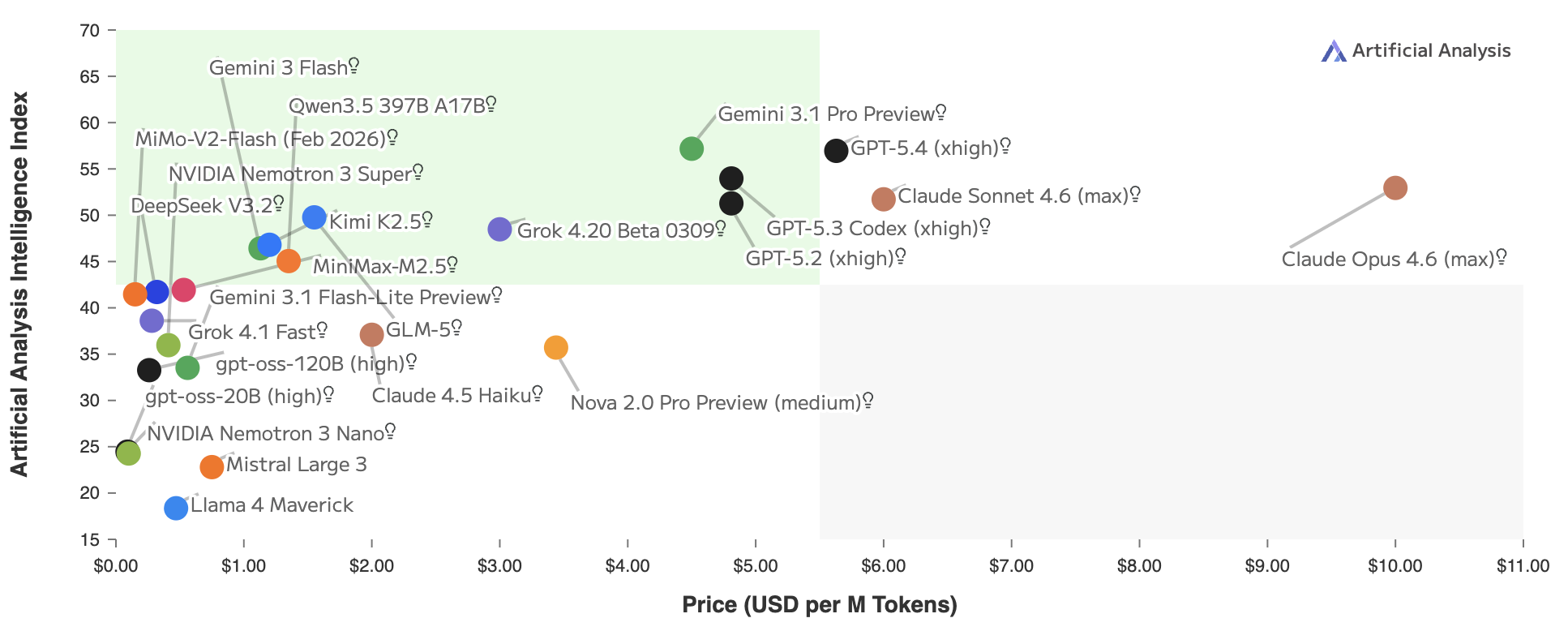
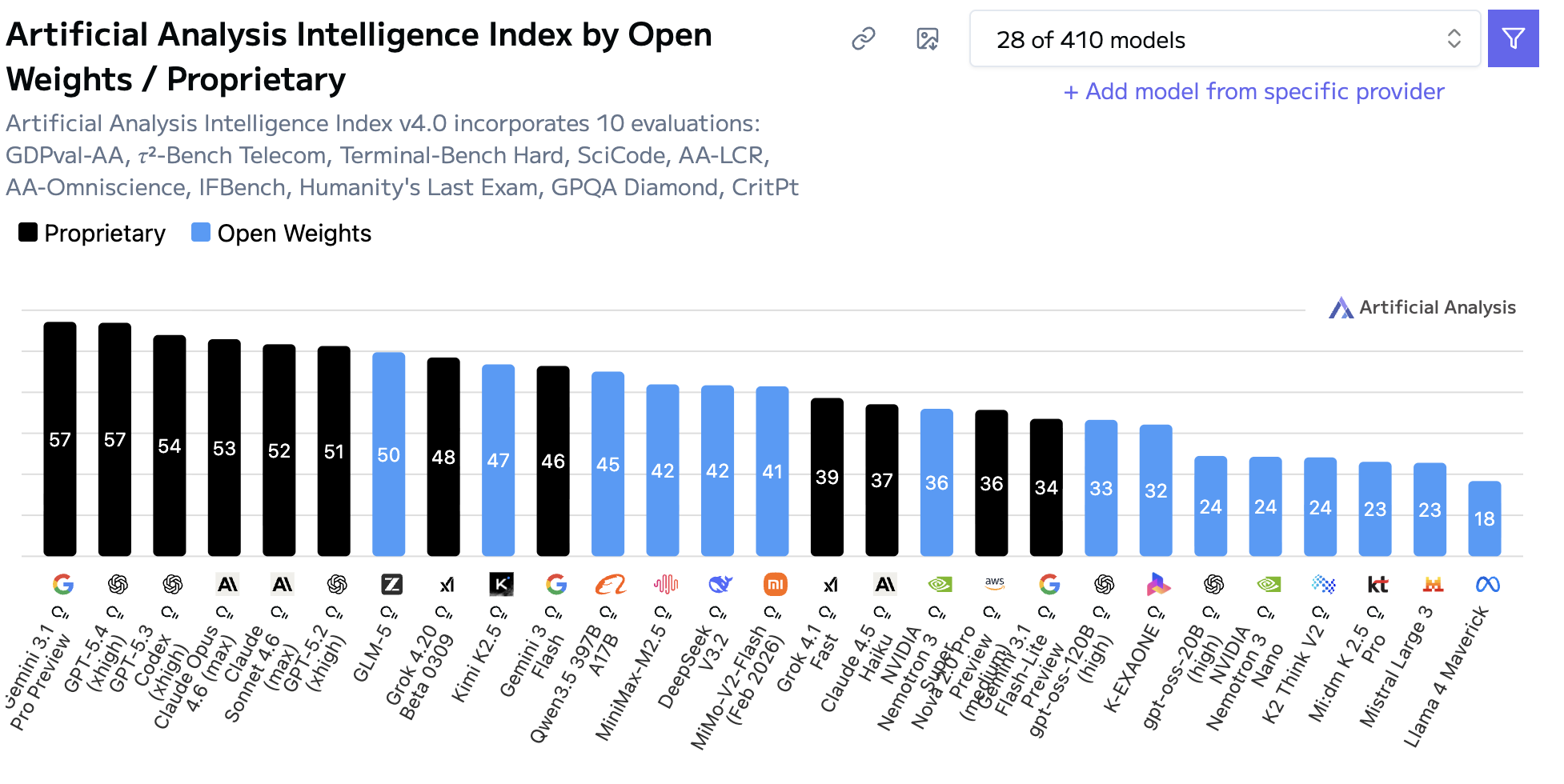
The table below shows current pricing across both self-hosted and API options:
Current Model Pricing (March 2026)
| Model | Best For | Input $/M |
Input NPR/M |
Output $/M |
Output NPR/M |
|---|---|---|---|---|---|
| Self-hosted small (7–14B) | Everyday Q&A, translation, form drafting, voice interfaces | ~$0.02 | ~NPR 3 | ~$0.05 | ~NPR 7 |
| Self-hosted mid (30B) | Longer documents, summarisation, structured data, multi-turn chat | ~$0.08 | ~NPR 12 | ~$0.15 | ~NPR 22 |
| Self-hosted large (70B) | Complex reasoning, legal/medical text, coding, research | ~$0.25 | ~NPR 37 | ~$0.45 | ~NPR 66 |
| Gemini 2.0 Flash (Google, closed) | Fast multimodal tasks, 1M token context, image + text | $0.10 | NPR 15 | $0.40 | NPR 59 |
| GPT-5 mini (OpenAI, closed) | Lightweight frontier tasks, strong instruction-following at lower cost than GPT-5 | $0.25 | NPR 37 | $2.00 | NPR 294 |
| Kimi 2.5 (Moonshot AI, open) | Strong multilingual performance including South Asian languages, 128K context | $0.30 | NPR 44 | $1.20 | NPR 176 |
| Llama 4 Maverick (open, hosted API) | Mixture-of-experts architecture, 1M+ context, strong at coding and reasoning, self-hostable | $0.27 | NPR 40 | $0.85 | NPR 125 |
| DeepSeek R1 (open, hosted API) | Advanced math and reasoning, GPT-4 class performance, fully open-weight for self-hosting | $0.55 | NPR 81 | $2.19 | NPR 322 |
Infrastructure Requirements by Deployment Scale
The figures below are illustrative conservative capacity scenarios, with headroom built in for reliability, redundancy, and peak demand. A practical national program would begin with a small pilot and scale incrementally.
| Deployment | Model Size | Servers (conservative) | Hardware Cost (USD) | Hardware Cost (NPR) |
|---|---|---|---|---|
| Pilot (500K users) | Small (7 to 14B) | 30 to 80 | $9M to $24M | NPR 1.3 to 3.5 arba |
| Pilot (500K users) | Mid (30B) | 60 to 160 | $18M to $48M | NPR 2.6 to 7.1 arba |
| National (16.5M users) | Small (7 to 14B) | 200 to 500 | $60M to $150M | NPR 8.8 to 22 arba |
| National (16.5M users) | Mid (30B) | 600 to 1,500 | $180M to $450M | NPR 26.5 to 66 arba |
| National (16.5M users) | Large (70B) | 1,500 to 4,000 | $450M to $1.2B | NPR 66 to 176 arba |
Annual Operating Costs (Power, Cooling, Staff, Networking - approximately 20% of hardware per year)
| Deployment | Annual Operating Cost (USD) | Annual Operating Cost (NPR) |
|---|---|---|
| Pilot, small model | $1.8M to $4.8M | NPR 26 to 70 crore |
| National, small model | $12M to $30M | NPR 1.8 to 4.4 arba |
| National, mid model | $36M to $90M | NPR 5.3 to 13.2 arba |
Annual Token Cost for 16.5 Million Connected Citizens
| Annual Tokens per Citizen | Self-hosted Small (7 to 14B) | Self-hosted Mid (30B) | Self-hosted Large (70B) |
|---|---|---|---|
| 1 million | NPR 9.7 crore | NPR 29 crore | NPR 85 crore |
| 5 million | NPR 48 crore | NPR 1 arba 45 crore | NPR 4 arba 25 crore |
| 10 million | NPR 97 crore | NPR 2 arba 91 crore | NPR 8 arba 49 crore |
All figures are illustrative estimates only, based on an assumed token mix; actual costs will vary by usage pattern and model configuration.
Bhutan Story:
For comparison, Bhutan started mining Bitcoin in 2019 using surplus hydroelectric power at near-zero cost. By October 2024, the government’s holdings peaked at 13,295 BTC worth approximately $1.5 billion. Since then, Bhutan has been steadily selling in structured batches, with total liquidations exceeding $1 billion.
It funded a 65 percent raise in civil servant salaries, expanded free healthcare programs, and the Gelephu Mindfulness City development project. As of early 2026, Bhutan still holds roughly 5,400 BTC. Bhutan converted a natural resource, surplus hydroelectric power, into a sovereign digital asset strategy that now funds core government services.
For Nepal, the equivalent is a policy decision about AI access.
AI Also Generates Video, Audio, and Images
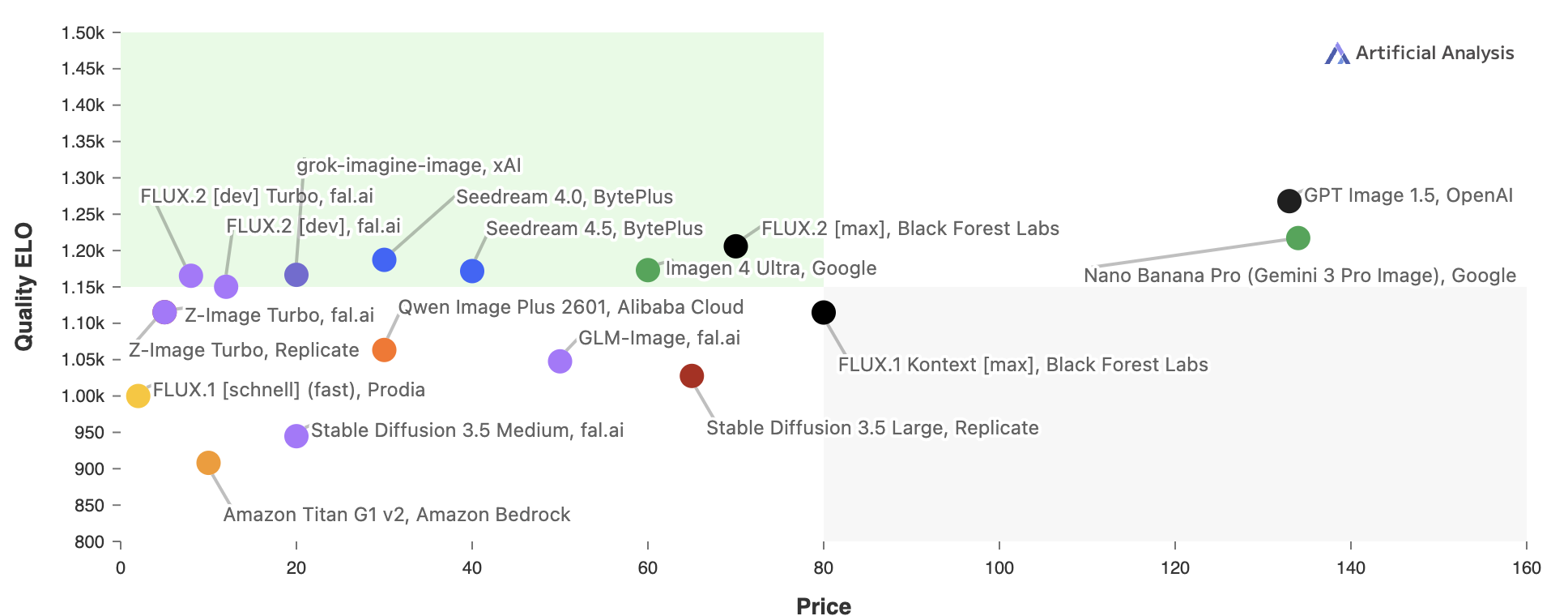
Most people think of AI as a tool for answering questions, but the open-weight ecosystem now includes models for generating video, audio, and images at quality levels that were only possible through expensive paid services two years ago.
Open-Weight Video Generation Models (2026)
| Model | By | What It Does |
|---|---|---|
| Wan 2.2 | Alibaba | Text to video and image to video at 720p |
| HunyuanVideo | Tencent | Cinematic video, 13B parameters |
| MiniMax Video-01 (Hailuo) | MiniMax | High-motion cinematic video (commercial API, not open-weight) |
| LTX-Video | Lightricks | Fast generation, up to 4K |
| Mochi 1 | Genmo | Photorealistic video, 10B parameters |
| CogVideoX-5B | Tsinghua and Zhipu | Short-form video, simple to run |
Several of these models can generate short, usable video clips in under a minute on high-end consumer or workstation GPUs, depending on model and settings, at a quality level that a non-technical creator can work with. These models are free to download and run on any server.
Nepal has a strong tradition of storytelling, documentary filmmaking, and music. A filmmaker in Kathmandu or a musician in Pokhara with access to these tools can produce content that reaches global audiences, which was not practically possible before at these cost levels.
Building This Creates an Industry Nepal Does Not Have Yet
The act of setting up national AI infrastructure creates jobs and expertise that Nepal currently loses to emigration. Data centers need engineers, operators, security specialists, and network architects. Once that infrastructure exists, foreign companies looking for a reliable, politically neutral place to run AI experiments have a concrete reason to come to Kathmandu.
Citizens who want more tokens beyond their free allowance can buy additional capacity at cost, which funds the program and builds a commercial AI services layer. Nepali developers who want to build AI-powered products can use the same infrastructure at competitive local rates, which is something that simply does not exist today.
This is how the ecosystem grows. Cheap access at the foundation makes it easier to build businesses on top, and those businesses create demand that justifies expanding the infrastructure further over time.
Nepal Can Be Neutral Ground Between the US and China
The competition between the United States and China in AI creates a specific opening for countries that do not have to take sides, and Nepal’s long diplomatic tradition of staying neutral between its two enormous neighbors applies directly here.
Nepal could position itself as a place where AI companies from both countries are welcome to deploy, run language experiments, and partner with local universities and institutions. Hosting international AI workshops, inviting model labs to work on Nepali language data, and building a reputation as a country that moved early on AI access are all achievable within a few years at modest cost.
Bhutan branded itself as the world’s first carbon-negative country and introduced the Gross National Happiness index as an alternative to GDP, and those two ideas opened diplomatic and economic doors for decades. Nepal being the first country to give every citizen free AI access would send a similar signal to the world.
What Citizens Can Do With Free AI Access
For individuals:
- Students get help with tutoring, writing, translation, and research in Nepali at any time
- Farmers get advice on crops, weather patterns, and market prices without needing expert access
- Small business owners can draft documents, handle correspondence, and manage basic bookkeeping without outside help
- Job seekers get assistance writing CVs, preparing for interviews, and learning skills that are in demand
- Developers and freelancers get coding and research tools that make them faster and more competitive for global work
- Creators get image, audio, and video generation tools without expensive monthly subscriptions
- People in remote areas get useful information in Nepali and through voice, even without strong reading skills
For Nepal’s economy:
Industry estimates suggest Nepal’s IT service exports reached about NPR 1 kharba 45 arba in 2025, built almost entirely on a few thousand trained engineers. AI coding tools have changed what a single developer can deliver. A developer who ships twice as fast is worth more to global clients, and there is no ceiling on that market.
Industries that AI transforms most directly:
| Industry | How Free AI Access Changes It |
|---|---|
| Software development | Coding tools raise individual output; IT export potential grows significantly |
| Content creation | Video, audio, and image tools open new media businesses to anyone with a device |
| Education | Local-language tutoring accessible from any phone, at any time |
| Agriculture | Crop diagnosis, weather analysis, and market price queries without intermediaries |
| Healthcare | Basic medical help for people in areas where doctors are not available |
| Legal and financial services | Document drafting and translation for those who cannot afford professionals |
| Tourism | Real-time translation and AI-assisted guide services for international visitors |
| Outsourcing and services | Nepali workers offering AI-augmented services to global clients |
The internet gave everyone access to information, and AI gives everyone the ability to actually do work with that information. For a country that has relied for decades on sending its most capable people abroad rather than selling their output from home, the difference between those two things is the real argument for acting now.
This Is the Right Moment
The internet arrived slowly in Nepal, required literacy, and worked better in English than in Nepali. AI is arriving fast, already works well in local languages, and operates through voice as well as text, which means it is accessible to people who cannot read.
Nepal could not have given free internet to every citizen in 2005 because the infrastructure did not exist; the cost was prohibitive, and the content was not localized. In 2026, Nepal can give free AI access to every citizen using models that are free to download and infrastructure that can be built incrementally as demand grows.
The governments that recognize this early will compound faster than those that wait. A population with access to AI tools learns to use them, builds businesses around them, and develops the expertise to compete globally in AI services.
Nepal has watched every recent technology wave from the outside. The AI wave is the first one where the core technology is already free, the cost is known, and the only remaining question is whether Nepal decides to act.
What the Government Should Do
- Allocate budget to hosting open-weight models on government-supported infrastructure, starting with a pilot that serves a few hundred thousand users before scaling up nationally
- Assign a token budget to every citizen through the national digital identity system, with priority for rural and lower-income users in the early rollout
- Build data center infrastructure using a public-private partnership approach similar to what Nepal has used for hydropower projects, distributing both cost and risk
- Create a paid tier above the free citizen allocation that recovers a portion of operating costs and builds a local AI services industry over time
- Run national AI literacy programs so that citizens can actually use the tools they are given, starting with schools, agricultural extension programs, and local government offices
- Invest in training and upskilling Nepali engineers specifically in AI infrastructure, model fine-tuning, and Nepali language AI, so the expertise to run and improve this system exists domestically
- Make regulatory changes to invite AI companies from India, China, and elsewhere to operate in Nepal, collaborate on Nepali language and voice model development, and run workshops in Kathmandu
- Make a clear public commitment to being the first country to give every citizen meaningful free AI access, which is itself a signal to investors, researchers, and partner governments
Nepal has 30 million people, not 300 million or 3 billion, and a single-focused government ministry with a clear mandate could stand this up within two to three years. The tools exist, the costs are known, and the only thing left is a decision whether to take the leap or not.
Data Sources
Nepal Economic Data:
- Population (2025): approximately 30 million
- Internet users (January 2025): approximately 16.5 to 16.6 million, around 56% penetration (DataReportal Digital 2025 and 2026)
- Mobile connections (2025): 39 million, 132% of population (DataReportal Digital 2025)
- Remittances (FY 2024 to 2025): Rs. 1,723 billion or NPR 17 kharba 23 arba, around 28 to 29% of GDP (Nepal Rastra Bank)
- IT service exports (2025): industry estimates suggest approximately $1 billion or NPR 1 kharba 45 arba (NAS-IT, Nepal Association for Software and IT Services Companies, February 2025; 2022 IIDS baseline was $515 million)
- Tourism revenue (FY 2024 to 2025): approximately $643 million or NPR 94 arba (Government of Nepal)
- Government annual budget: approximately NPR 17 kharba 90 arba
AI Access and Usage:
- ChatGPT weekly active users (early 2026): approximately 900 million (Backlinko, DemandSage)
- ChatGPT paying subscribers (early 2026): more than 50 million consumer subscribers and approximately 9 million business users (OpenAI, The Information)
- Daily tokens processed by ChatGPT (May 2025): approximately 79.6 billion among 400 to 500 million active users (OpenRouter via Nathan Lambert)
- Average token consumption estimate: approximately 2,000 tokens per user per day
Model Pricing (March 2026):
- GPT-5 mini: $0.25 input and $2.00 output per million tokens (OpenAI)
- DeepSeek R1: $0.55 input and $2.19 output per million tokens (DeepSeek)
- Kimi 2.5: approximately $0.30 input and $1.20 output per million tokens (Moonshot AI)
- Llama 4 Maverick (hosted): $0.27 input and $0.85 output per million tokens (OpenRouter)
- Gemini 2.0 Flash: $0.10 input and $0.40 output per million tokens (Google)
- Self-hosted small model 7 to 14B: approximately $0.02 to $0.05 per million tokens
- Self-hosted mid model 30B: approximately $0.08 to $0.15 per million tokens
- Self-hosted large model 70B: approximately $0.25 to $0.45 per million tokens
GPU Hardware (2026):
- NVIDIA H100 80GB: $25,000 to $40,000 per card to purchase (Jarvislabs, GMI Cloud, Northflank)
- Complete 8xH100 server: $250,000 to $400,000 including infrastructure (GMI Cloud, Hyperstack); used as $300,000 average for estimates
- Annual operating cost: approximately 20% of hardware cost per year (power, cooling, networking, staffing)
- Server figures are illustrative conservative capacity scenarios with 5x peak load headroom; actual minimum requirements will depend on concurrency, quantization, and usage patterns
- Frontier model training runs have required enormous compute clusters running for months, at costs running into the hundreds of millions of dollars per run; exact figures for individual models are not publicly confirmed
- VRAM requirements: 7B models need 6 to 14 GB; 30B models need 20 to 40 GB; 70B at Q4 quantization needs 35 to 48 GB; 70B at full precision needs 140 GB or more
Open-Weight Video Models (2026):
- Wan 2.2 (Alibaba, Apache 2.0): 720p text to video (Pixazo, SiliconFlow)
- HunyuanVideo (Tencent, Open): 13B parameters (KDnuggets, Hyperstack)
- MiniMax Video-01 or Hailuo (MiniMax): high-motion cinematic quality; commercial API, not open-weight
- LTX-Video (Lightricks, Open): 30fps at 1216 by 704 resolution (KDnuggets)
- Mochi 1 (Genmo, Apache 2.0): 10B parameters, photorealistic (RunPod, KDnuggets)
- CogVideoX-5B (Tsinghua and Zhipu, Apache 2.0): short-form video (KDnuggets)
South Asian Language Models:
- IndicTrans2 (AI4Bharat at IIT Madras, MIT license): covers Nepali and 22 other South Asian languages
- Sarvam AI (open models): speech and language models for South Asian languages including Nepali and Maithili
Bhutan Reference:
- Bitcoin accumulation: mined continuously since 2019 using surplus hydroelectric power
- Peak holdings (October 2024): 13,295 BTC worth approximately $1.5 billion at peak prices
- Total liquidated since late 2024: well over $1 billion (Arkham Intelligence, Coindoo)
- Current holdings (early 2026): approximately 5,400 BTC
- Proceeds used for: 65 percent civil servant salary increases, free healthcare expansion, Gelephu Mindfulness City development (FinanceFeeds, Coindoo, Arkham Intelligence)
Exchange rate used: 1 USD = 147 NPR (Xe, Yahoo Finance, March 2026)